
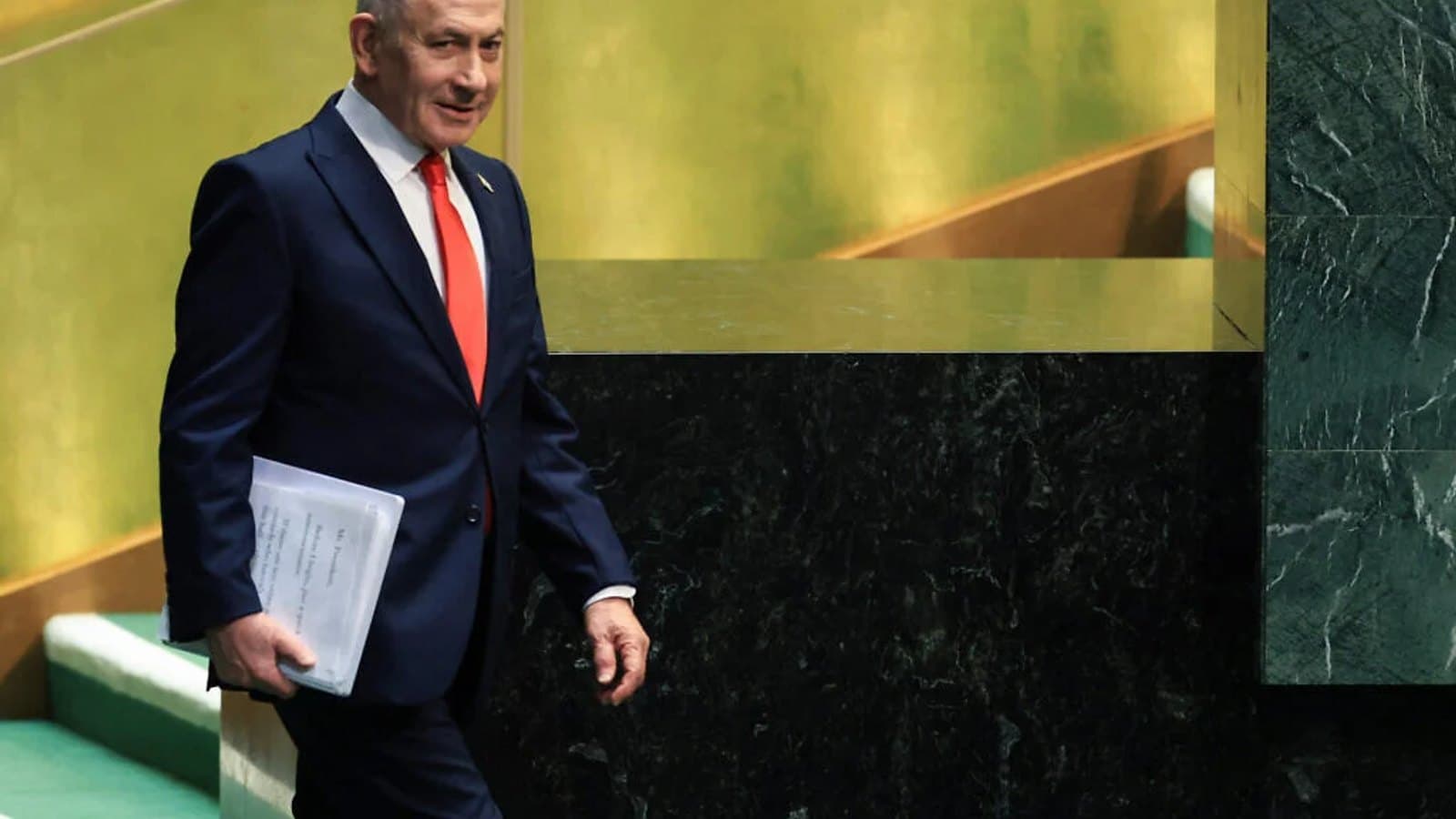
Prime Minister Netanyahu told the UN General Assembly on Wednesday that Israel did not commit genocide, Israel prevented genocide, a direct answer to the accusation New York Mayor Zohran Mamdani had levelled at him days earlier. He accused Qatar of massively funding American universities and toxic media outlets like Al Jazeera to turn young people against Israel and the West, and called on left and right, young and old, religious and secular to recognise that what unites Israelis is stronger than what divides them.
What the speech left out is doing more work than what it included, according to Times of Israel founding editor David Horovitz. Netanyahu did not acknowledge his own failure to prevent the 7 October 2023 attack, in which Hamas killed roughly 1,200 people and abducted 251, despite Israel having obtained Hamas's war plans more than a year before. He did not mention his government's earlier encouragement of Qatari funding into Gaza, money that reached Hamas. He has still not established a state inquiry into the failures of that day.
The unity language sits awkwardly next to Netanyahu's own record on the divisions it describes. Ultra Orthodox draft exemptions and his government's attempts at judicial reform are two of the fault lines that have widened Israeli society during his tenure, and the speech asked the country to set aside exactly the kind of split his own policies helped create.
None of this is aimed at diplomats, many of whom walked out before Netanyahu spoke and were never going to be persuaded by a UN floor speech regardless of its content. The real audience is an electorate voting roughly a month after the address, one that has spent three years learning the details a UN floor speech cannot rebut by omission. Strong rhetoric abroad and skepticism at home are not contradictory reactions to the same words. They are what happens when an audience already knows what was left out.