
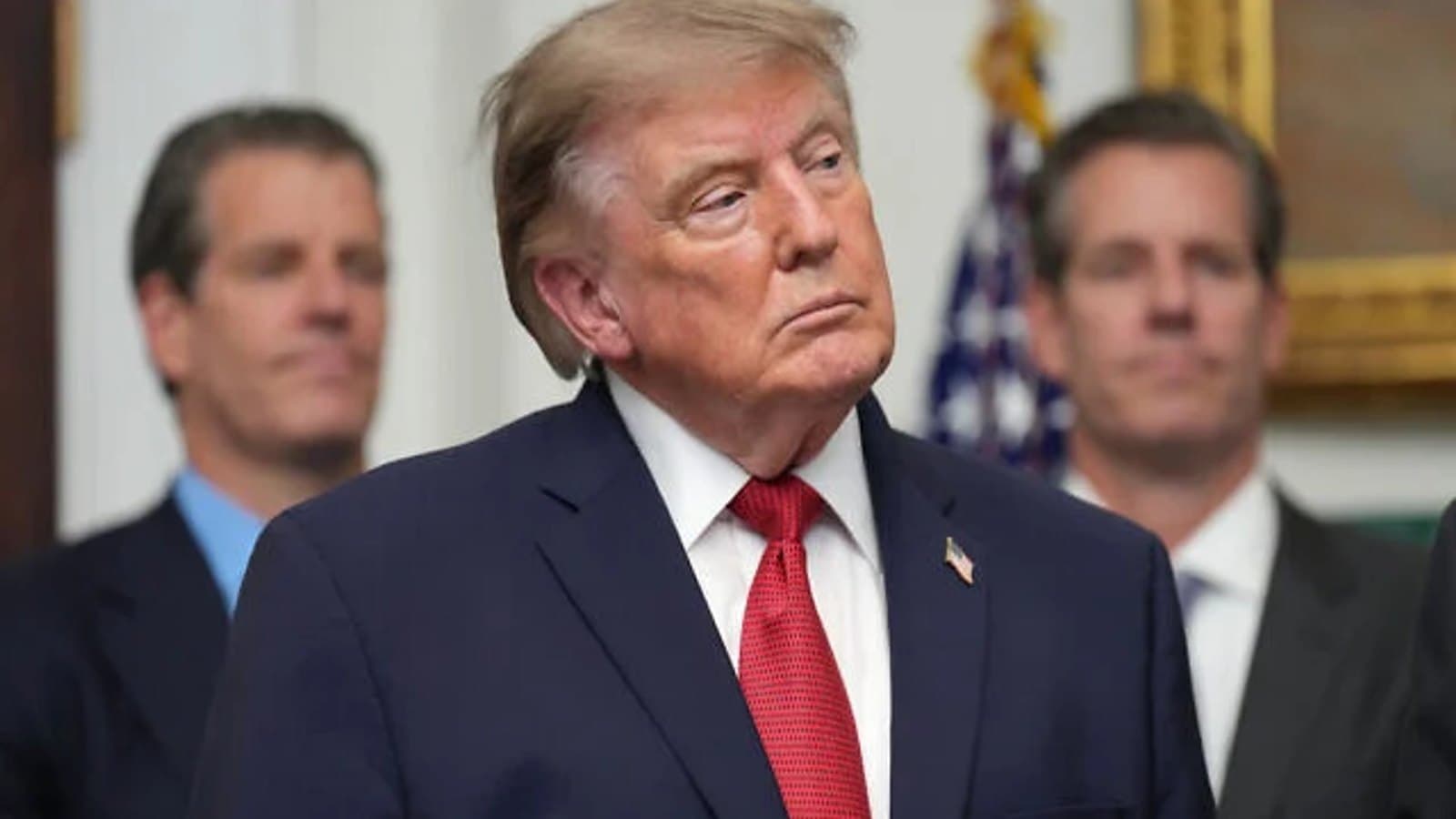
Donald Trump declared what he called economic D Day against Iran, listing oil smuggling, swap lines, cash transfers, exchange houses, ship registries and front companies as channels that need to stop now. He said any country that lets its financial institutions, businesses, airports or government entities provide any kind of lifeline to Iran will itself face tremendous economic consequences.
He described the Iranian leadership as maniacs on the ropes and said the new measures are historic and will cripple their ability to project terror worldwide. The declaration comes with the war between the United States and Israel on one side and Iran on the other approaching six months, without a diplomatic resolution and with growing domestic questioning of its cost to American consumers and the military ahead of November's election.
On the ground the picture is more contained than the language. A US official said American forces have controlled the southern lane of the Strait of Hormuz for two months, moving 15 to 20 ships through it nightly and carrying roughly 10 million barrels a day, about half of pre war volume. The same official said the Revolutionary Guard can be a nuisance in the strait but does not control it.
The Treasury has been running a sanctions campaign called Operation Economic Fury for months, and the newest sign of its reach came from the United Arab Emirates, which suspended all economic dealings with Iran after reportedly being targeted by two ballistic missiles. Trump's economic D Day language describes an escalation of a campaign that was already running, rather than the start of a new one.