
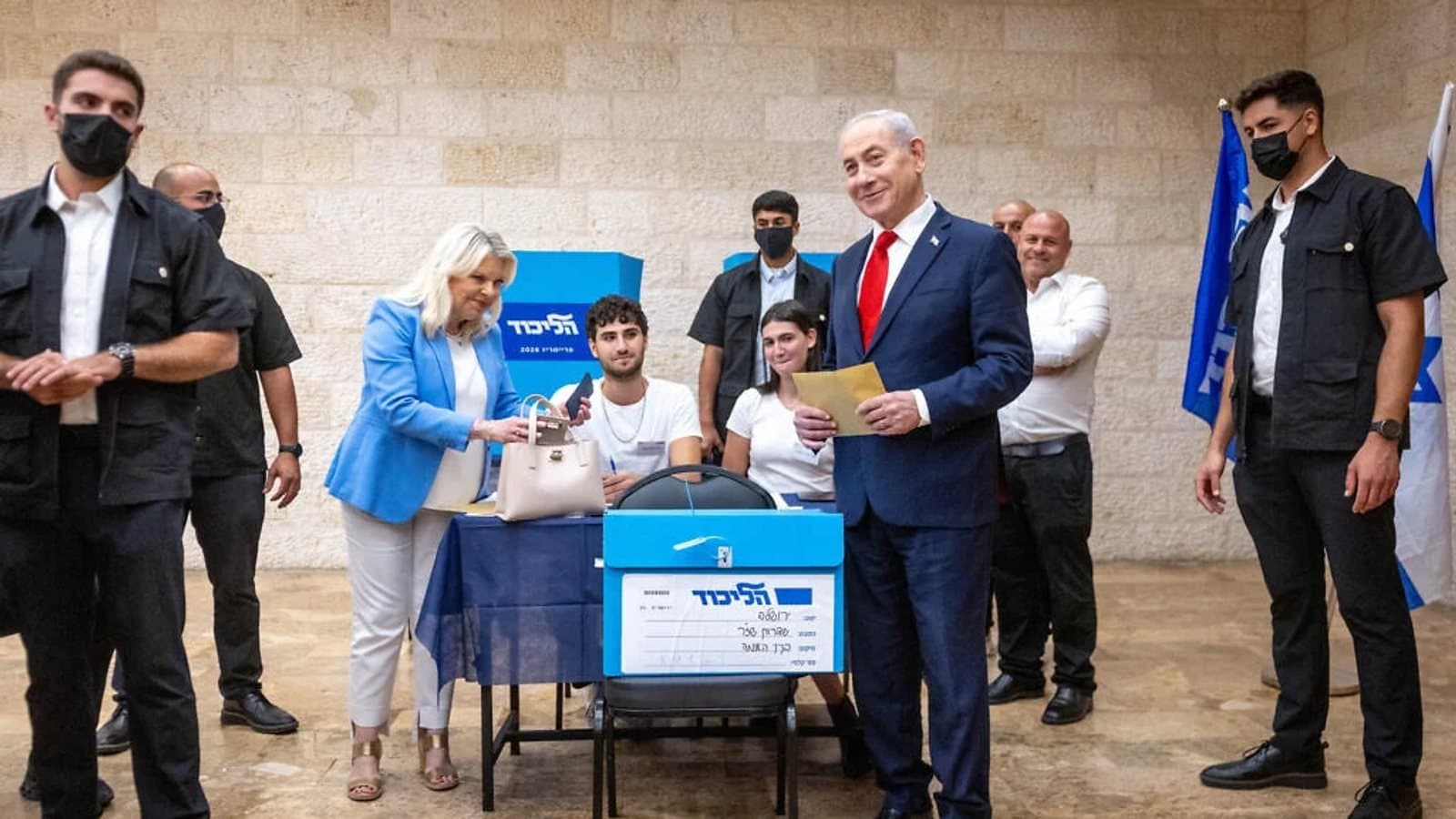
Likud members voted on Monday to shape the party's Knesset slate for the election on 27 October. Turnout was about 53 percent, which is low for a primary that is effectively the selection of a governing party's candidates. Benjamin Netanyahu voted in Jerusalem with his wife Sara. Ultra Orthodox members were reported to have turned out in numbers.
The figure is easier to read alongside what the vote now decides. Netanyahu's control over the composition of the list has grown, and the share of it that members place directly has shrunk. A primary that determines fewer of the safe seats is a primary fewer members will cross town for, and 47 percent staying home is the arithmetic version of that.
The mechanics of the day showed how narrow the contests get. An aide to Heritage Minister Amichai Eliyahu signed up 324 Likud members to vote on questions of safety at Meron, the pilgrimage site where 45 people were crushed to death in 2021. Three hundred and twenty four is a small number in a national party and a decisive one inside a single slot.
The wider board moved separately. A Channel 12 poll found the opposition bloc reaching 63 seats, a majority, if the retired general Ofer Winter forms a right wing party and joins it, against 60 without him. Likud spent Monday arranging its own order. One retired officer who has not yet founded a party would matter more to the outcome than the whole exercise.