
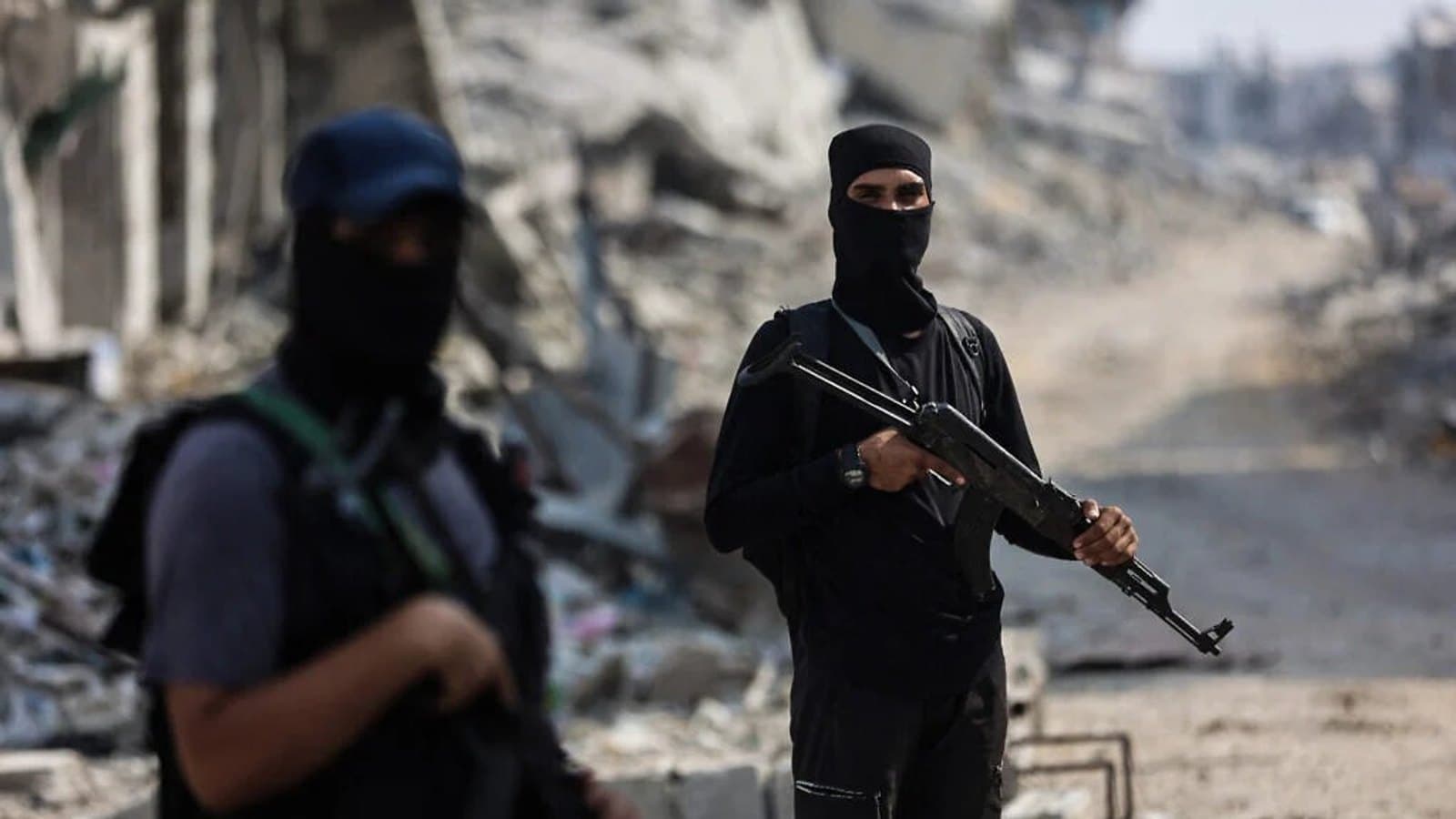
Doron Spielman, a spokesman for the prime minister's office, told the White House that Israel holds serious security concerns about the disarmament arrangement. The assessment he conveyed is not that the timetable is too slow but that Hamas intends to rebuild its military rather than give it up, which is an argument about intent rather than about scheduling.
The military's position follows from that. It will not withdraw from Gaza, where it controls more than 60 percent of the territory, until weapons are actually handed over. Israel is therefore treating the ground it holds as the security for a promise it does not trust, and every day of delay is being read on one side as caution and on the other as bad faith.
Strikes have continued inside the ceasefire. Three operatives were killed in recent attacks, named as members of the Army of Islam, Palestinian Islamic Jihad and Hamas's Jabalia Battalion, with the stated justification of removing a threat to Israeli troops. A ceasefire that permits strikes on that basis is a ceasefire whose limits are set by whoever assesses the threat.
The gap on the American side is procedural and telling. Israeli officials learned that President Donald Trump had called off a major attack on Iran from his own post on Truth Social, and US Central Command was not told in advance either. Allies finding out from social media is not a communications failure at the margin, it is a description of how the decision was taken.
Separately, an Iranian diplomat told the Wall Street Journal that the Revolutionary Guard is weighing preemptive strikes should talks with Washington fail. The report does not make clear whether the targets under discussion are American assets, Israeli ones, or both.